
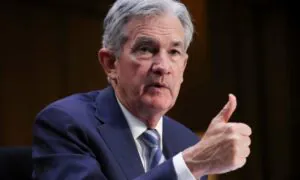
It was just six months ago, at the infamous Jackson Hole symposium, where Fed Chairman Powell warned that higher interest rates to reduce inflation would “bring some pain.” Fast forward to today, and it’s clear Powell was absolutely right, though probably not in the way most people expected.
Higher interest rates have helped reduce inflation, but it's the stock market bears who are suffering as stocks rally. The S&P 500 (SPX) is up nearly 20% from its 2022 low, as the market bottom looks increasingly hidden.
finviz
Indeed, the Fed's last meeting in February may be remembered as the unofficial end of the bear market through a major turning point in the narrative. With a 25 basis point interest rate hike, bringing the federal funds rate to 4.75%, the biggest development was the shift in messaging from the ultra-hawkish stance that was a staple in 2022. The Fed now acknowledges an improving inflation outlook, signaling the end of the rate-hike cycle.
Simply put, the hard data that matters has performed better than expected in recent months, justifying the Fed's pivot. In particular, signs indicate that the economy remains resilient despite tighter financial conditions. Bears may not want to believe it, but it appears the Fed will eventually achieve price stability, avoiding a deep recession. This is precisely the path to a "soft landing" scenario that could bode well for stocks.
We've been firmly bullish on stocks in recent months, and I expect further appreciation in the future. Our message here is that the outlook has become more positive, which will force bears to start throwing in the towel on more doomsday scenarios. We highlight what's changed and what's next.
Data for Y charts
Bears are on the wrong side of the trade
An important part of our investment process is to at least look at the other side of the argument and try to understand why a large segment of the market remained convinced of a major bearish decline. This proved difficult because, frankly, many of the short-term talking points simply didn't make sense.
Some say the economy is on the brink of runaway hyperinflation, implying the Fed will be forced to keep hiking rates ad infinitum, or we're on the verge of a deflationary collapse that will bring unemployment levels back to the Great Depression. This is a bit of an exaggeration, but bears have generally retreated into one of these tents.
We mention this because a single sentence from this week's FOMC press conference dealt a fatal blow to both scenarios. According to Fed Chairman Powell:
“It is gratifying to see the deflationary process underway, with a still strong labor market.”
Without being dramatic, these words represent a true turning point. First, the Fed is confirming what the bulls already knew: inflation is dead. Although the CPI technically peaked last June at 9.1%, the Fed has repeatedly been reluctant to give any indication that the trend was moving in the right direction.
Anyone suggesting now that inflation is accelerating, or about to rebound sharply, is dangerously outside the consensus. This apparent consensus reversal dynamic is also a significant shift from last year. For much of 2022, bears have been working to use the Fed's statements and Powell's own words as a kind of blessing to justify a sharply lower stock price outlook, which was wrong then and even more wrong now.
commercial economy
It's the bears who are fighting the Fed now. This point is also relevant to the final part of the same quote, suggesting that the Fed is satisfied with a strong labor market, which is proving resilient and not preventing inflationary pressures from easing.
In our interpretation, Powell is saying that a simple weakening of the labor market coupled with a slowdown in wage growth may be enough to achieve price stability. In many ways, the pessimists have staked their claim on the assumption that sharply high unemployment and a deep recession were inevitable in this cycle and the only way to control consumer prices.
In other words, the Fed isn't trying to create a recession or crash the labor market, as some have suggested. This is crucial as we await the upcoming monthly payroll reports. Evidence of continued job growth and, at the very least, stable working conditions should be hailed by the bulls as "good news," inferring that the economy is avoiding a deeper recession.
Our view is that, at this stage of the cycle, the number of key jobs and even modest wage growth are no longer the primary drivers of monthly inflation. Investors should pay attention to the operational and financial condition of companies in terms of corporate results.
commercial economy
At this point, trends have been solid. Prominent companies like Meta Platforms, Inc. (META) are demonstrating that operating conditions remain stable while presenting a roadmap for how efficiency efforts and cost-cutting initiatives can work to maintain profitability. Improving corporate margins could be a key theme for the remainder of 2023, providing a tailwind for the stock.
Let's not forget the impact of a weakening dollar supporting global economic activity. While higher interest rates are a headwind, more favorable developments in other factors, including lower inflation, help offset these trends. Improving consumer confidence should also support growth going forward.
What will the Fed do next?
What's at stake is the Fed's next policy move—whether it should achieve a final 25 basis point hike in March as the final round of the cycle or further tightening. The Fed has said it expects more "jumps," plural, but everything is subject to change depending on the data.
Our call is that another hike might make sense as a capstone in anticipation of the final CPI reports for January and February, which will be released before the next FOMC meeting on March 22. There's a chance we could also see a smaller surprise.
While some components of the consumer price basket have been mixed, key categories such as energy, commodities, vehicles, and used cars still exhibit deflationary trends year over year. In the first quarter, the index begins to experience particularly challenging compositions, following the high levels of the first half of last year.
There's no reason to expect used car prices, for example, to rise further, and it's also encouraging to see energy benchmarks remaining at low levels. All indications are that the global annual rate will continue to decline, with the CPI on track to reach 3% by the end of 2023.
BLS extension
We can argue about the basis point spread, but the more important point here is the recognition by both the market and the Fed that significantly higher interest rates are not necessary.
This is also reflected in the bond market, where interest rates have retreated from their cyclical highs. This trend has generated some controversy, with some interpreting the 10-year Treasury yield's decline from 4.3% to its current level near 3.5% as a harbinger of a recession. The more mundane explanation is simply the acceptance that long-term inflation expectations are pegged to the downside. This is a level that has been considered reasonable at various points over the past decade, hardly exceptional in our view.
Data for Y charts
The bears keep swinging
One mistake the bears made stems from their underlying assumption that a Fed funds rate of 4.75%, 5%, or 5.25% should or will bring down the economy. In this regard, the perception over the past few months is that both business and consumer spending have managed the environment relatively well. This was one of the messages from the CEO of Visa Inc. (v) in his quarterly report, describing a "boring stability" in payment trends. That's a good thing, by the way.
What's also a good kind of boredom is the VIX index, sometimes called "Wall Street's fear gauge," falling below 19.0 and to its lowest level since 2021. The reading here is that there is much less uncertainty in the market, which is a night-and-day difference from conditions early last year, when there was a period of panic selling.
finviz
Final thoughts
The bears had their moment this time last year, but it's time for this group to go back to the drawing board. We stand with investors who recognize the bigger picture and the long-term outlook that will always outweigh the daily market noise.
On the upside, the S&P 500's next target will be US$4,300, which served as a resistance area in the second quarter. The argument we're making here is that the outlook is stronger today than at any point last year, which could act as a catalyst for further upside. Looking ahead, the index's all-time high above US$4,800 could occur sooner rather than later.
The question becomes: where could we go wrong in our forecasts from here, and what would force us to reevaluate? First, we should view a break in the S&P 500 below US$ 3,800 as a key support area. As long as we hold above this level, the bulls will be in control.
Second, the situation in Ukraine remains complex, and we don't have a clear endgame. Of course, there's still the possibility of an escalation of the conflict in Europe beyond the current impasse, which would take all bets off the table. The spikes in volatility in the coming months will likely stem from uncertainties surrounding the inflation outlook and, to be more precise, the pace of its cooling from here. Sharply higher energy prices would contribute to a rebound in the CPI, prompting the Fed to become more hawkish.
Furthermore, an unexpectedly sharper decline in economic indicators, driven by weakening consumer spending, also poses risks to stocks.
Y Charts
Add some conviction to your trading! Check out our exclusive bag picks. Join a winning team that does good. Click here for a free two-week trial.


