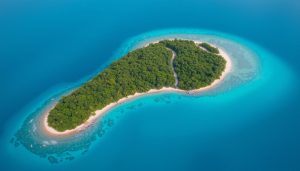
Venture through the most remote places in the world and explore isolated destinations that resist modernity. In adventure travel to the heart of the planet, the unexplored places are sanctuaries of nature and culture.
Visit Supai, a community of just 200 people, hidden 110 km from the nearest civilization. Or consider the fewer than 400 people in North Sentinel, 572 km from other communities. Each place has its own unique story waiting to be discovered.
On the South Sandwich Islands, scientists live in arid lands 1,400 km from other people. On Cape York, 18,000 people live 917 km from civilization. Saint Helena, 2,000 km from the nearest mainland, is another remote island.
By exploring these places, you discover unexplored mysteries. Experience the beauty of ancient cultures and the wildlife that still exists far from us.
The Fascination for Isolated and Unexplored Destinations
For those who want explore the unknown, visiting remote places is magical. Discovering preserved cultures and pristine natural landscapes is fascinating. These destinations, accessible only by off-grid travel, offer an escape from the modern world.
The search for isolated cultures and untouched landscapes
Places like Tristan da Cunha and Pitcairn Island are special. They allow contact with traditional communities and uncontaminated landscapes. The beauty of these unique adventures is in the interaction with a different lifestyle.
The unique experience of unplugging from everyday life
Going off-grid is more than just a trip. It's a chance to disconnect and connect with the world. Without the internet, travelers learn to navigate and communicate in person. They experience each moment more deeply, appreciating culture and nature.
The Brazilian Amazon: A Mosaic of Biodiversity and Cultures
THE Amazon is a vast territory, with more than 4 million km². It is famous for its biodiversity amazing and indigenous cultures rich. Millions of animal and plant species live here, many still unknown to science. Furthermore, it preserves traditions of remote communities that date back millennia.
Millions of species in a vast and rich tropical forest
THE Amazon It encompasses several Brazilian states and South American countries. It is the largest tropical timber reserve in the world. There are 13,056 plant species here, 13.4% of which are at risk of extinction. The fauna is also impressive, with over 120,000 animal species in Brazil, including some that are endangered.
The encounter with ancestral indigenous communities
THE Amazon is home to 22 million people, including indigenous people. These cultures live in harmony with the forest, maintaining a deep connection to the land. Projects such as Floresta+ Amazônia and Sustainable Amazon Landscapes seek to protect this biodiversity. They involve the local community in conservation practices.
Mount Roraima: The Majesty of the Triple Frontier
THE Mount Roraima is one of the biggest tepui of South America. It is located on the border between Brazil, Venezuela, and Guyana. This place is famous for its stunning landscapes and the union of three countries.
Go to Mount Roraima is a adventure unique. You pass through a world full of species that only exist there. When you reach the top, the views are incredible. They seem otherworldly, making the Mount Roraima a magical place for those who love nature and adventure.
A journey to the “tabletop mountain”
Climb the Mount Roraima is a challenge that attracts many. The path is full of unique rocks, dense forests and a rich biodiversityThis isolated and high place is unique.
The discovery of endemic species and surreal landscapes
In this place, you'll find plants and animals that exist nowhere else. It's one of the few places where the environment remains pristine. Here, you can see what the world was like before recorded history.
Exploring Mount Roraima is like traveling back in time. It's entering a world that hasn't changed in millions of years. Each step reveals new discoveries and incredible landscapes. Thus, Mount Roraima becomes a symbol of remote destinations and preserved from the world.
Angkor Wat in Cambodia: A Historic Monument in the Middle of the Jungle
Angkor Wat and the largest religious monument in the world. Show the architectural beauty Khmer. And it reflects the wisdom of a civilization that flourished between 802 and 1432 AD.
This complex is not just a tourist attraction. It's a historical heritage which tells the story of the Khmer Empire.
The architectural grandeur of the Khmer empire
Angkor Wat It was built in the 12th century. Suryavarman II was the king who commissioned it. About 50,000 people worked to erect its towers and walls.
The sculptures and reliefs tell Hindu stories and the greatness of the kings. They show the harmony between architectural beauty and nature.
Exploring the spirituality of centuries-old terraces and towers
Angkor Wat allows for immersion in ancient spirituality. The terraces offer incredible views of sunrise and sunset. Every corner of the temple city, converted to Buddhism, offers a new perspective.
The Angkor Archaeological Park is recognized by UNESCO and is a place of pilgrimage and wonder. When visiting, it's important to purchase an access pass and allow time to explore all the important temples, such as Angkor Thom and Ta Prohm.
The World's Most Remote Places: The Challenging Himalayas
THE Himalayas is famous for its incredible landscapes and natural challenges. It is also a place full of cultural tradition. The mountain range stretches for thousands of kilometers, offering adventures and spiritual enrichment. You can visit traditional villages and isolated monasteries.
The trails of adventure node Himalayas are famous for their technical challenges. They offer the chance to live in harmony with nature. Walking through Himalayas is to overcome physical and spiritual limits. You will find villages with ancient practices and customs, part of the cultural tradition of the region.
The charm of the highest peak on Earth and its adventure trails
Explore the Himalayas It's a unique experience. You feel dwarfed by the snow-capped peaks. The steep trails and ice fields test your physical endurance and adaptability.
Culture and tradition in the monasteries and surrounding villages
You traditional villages The Himalayan landscapes are like time capsules. Visiting these places is a way to learn about history and spirituality. Buddhist monasteries and local hospitality demonstrate the true meaning of community.
The Himalayas are a source of inspiration. Their natural beauty and cultural heritage beckon to adventure and meaning.
Svalbard in Norway: Between Northern Lights and the Midnight Sun
Svalbard, in the heart of the Arctic Ocean, is part of the NorwayThis place is extreme, with temperatures that can drop to -16°C in winter. In summer, temperatures rise to around 6°C.
The landscape is stunning, with ice and mountains everywhere. There are vast tundras and a wildlife impressive arctic, like polar bears. Svalbard is famous for Northern Lights and by midnight sun.
An immersion into the habitat of polar bears and freezing landscapes
From April to August, the midnight sun illuminates SvalbardThe sun never sets, providing constant light. This allows for unusual nocturnal activities.
The wonder of unique natural phenomena in the Arctic Ocean
In winter, the Northern Lights lights up the skies. The Polar Nights, which can last up to three months, are a spectacle. Skies of Svalbard are filled with green, purple and blue lights, attracting photographers and astronomers.
Svalbard is also important for global conservation. The Svalbard Global Seed Vault stores plant seeds. Longyearbyen, the administrative center, is a research and sustainable tourism community.
Visiting Svalbard, you see the Northern Lights and the midnight sun. It also helps preserve an extreme and fascinating ecosystem.
The Surreal Beauty of Bolivia's Salar de Uyuni
THE Uyuni Salt Flats in Bolivia is the largest salt desert of the world. It defies words, but captivates the imagination. At over 10,000 km², it transforms into a giant canvas reflecting the blue sky.
This reflection creates an incredible mirror effect. This makes the Uyuni Salt Flats an unmissable destination for photographers and adventurers. They seek surreal landscape that it offers.
Explore the Uyuni Salt Flats is a adventure Unique. Incahuasi Island, in the middle of the salt flat, is famous for its giant cacti. They emerge from the salt floor, creating a fantastic sight.
This island shows the contrast between life and the vastness of the salt desert.
Incahuasi Island and salt hotels in the middle of the largest salt desert
The culture and infrastructure of Uyuni Salt Flats are unique. Salt hotels are a highlight. Sleeping in a salt room is a unique experience.
The mirror effect of water in the rainy season
Visit the Uyuni Salt Flats The rainy season is special. From December to March, the ground reflects the sky perfectly. This creates the illusion of a parallel world.
This phenomenon makes the salt flat one of the more surreal landscapes of the world. The visit is an unforgettable experience.
Sahara Desert: The Spectacle of the Moroccan Dunes
THE Sahara Desert is a vast expanse of sand. It is an experience that combines adventure and encounter with nature. local culture. To the Moroccan dunes are natural monuments that offer incredible views.
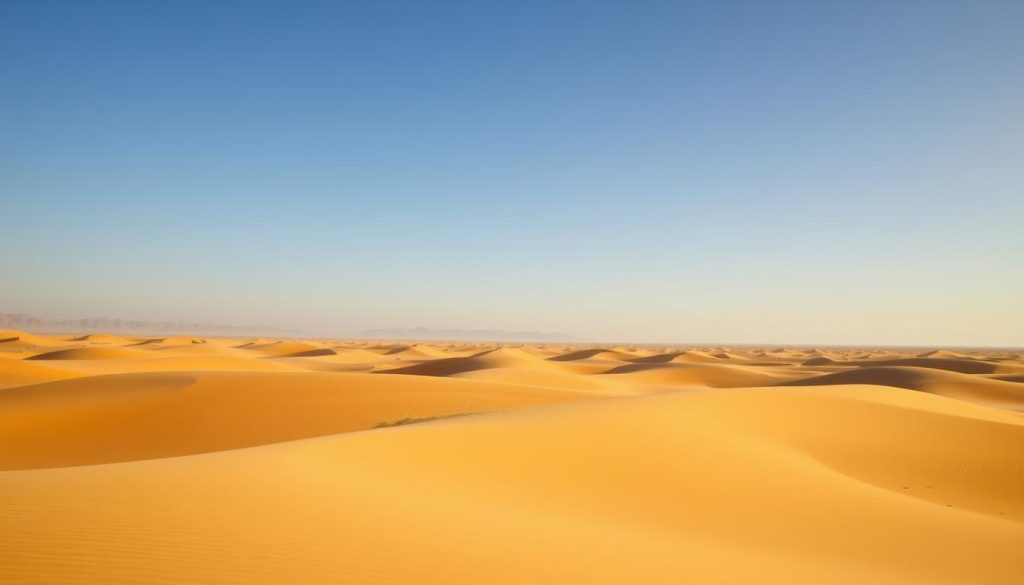
Adventure and contemplation in one of the largest deserts on the planet
You camel rides are unique. They are the traditional way of moving through the Sahara. Besides being effective, they offer an authentic glimpse into desert culture.
The camel's movement is relaxing. It helps you feel the tranquility of the landscape.
Gastronomy, art and the vibrant culture of the local people
THE local culture is rich and colorful. It manifests itself in meals, artisanal artifacts, and much more. Every detail tells a story of survival and beauty.
Spices add a new flavor to dishes. Music and dance fill the evenings with joy and history.
Explore the Sahara Desert It's more than an adventure. It's about immersing yourself in the history, art, and customs of a resilient people. It's a journey of sensations, learning, and connection with the land and its traditions.
The Enigmatic Easter Island and its Rapa Nui Legacy
THE Easter Island is in the Pacific Ocean, famous for ancient Rapa Nui culture and by moaiThese colossi are more than stone sculptures. They demonstrate the ingenuity and spirituality of a people who left their mark on every stone.
The tropical maritime climate and the population that reveres its ancestors make the Easter Island a unique place. There, ancient traditions still live on.
The mystery of the Moai and immersion in an ancient cultural heritage
You moai from the Easter Island They are more than just a tourist attraction. They help us understand the Rapa Nui society that existed in isolation. These statues, with a distant gaze, stand on platforms called Ahu.
The Rano Raraku site is the birthplace of the moai. And the Ahu Tongariki, with its fifteen moai, is a sacred place for many.
Discover beaches, caves and volcanoes on the most isolated island
THE Easter Island It's a world of natural discoveries. It has white sand beaches and crystal-clear waters. There are also caves and volcanoes that tell ancient stories.
The island's isolation has made it a unique place. Every natural element is a window into the past. ancient Rapa Nui culture still lives strong, inviting visitors to explore and learn.
Visit the Easter Island It's more than a trip. It's a journey to discover the human and natural legacy. And it transforms any visitor into a guardian of that heritage.
Iceland: The Contrasting Land of Fire and Ice
THE Iceland is known as the “Land of Fire and Ice”. It is a place that enchants with its natural beauty and Viking heritage. Its terrain is marked by volcanic landscapes and unique geology. In addition, the Northern Lights that light up the sky in winter are incredible.
Geysers, volcanoes and the mystical Northern Lights
THE Iceland is famous for its geothermal activity. Geysers and volcanoes create an impressive scene. The Golden Circle, with Gullfoss, Geysir, and Thingvellir National Park, showcases the island's seismic activity.
Furthermore, the Iceland It's great to see the Northern LightsThese dancing lights transform the sky into a living work of art.
Viking Heritage in Culture and the Midnight Sun Phenomenon
The Viking influence on Iceland is very strong. This is evident in the culture, traditions, architecture, and crafts. Viking heritage is highly valued, connecting the people to their rich history.
In the summer, the midnight sun It's an incredible phenomenon. The sun hardly sets, creating long, light-filled days. This allows you to explore natural wonders at your leisure.
Antarctica: The Planet's Last Remote Frontier
THE Antarctica is one of the most intriguing destinations in the world. This continent, the southernmost, covers 14 million square kilometers. It is known for its climate extremes and wildlife unique.
Your polar expeditions are risky, but full of discoveries. They attract scientists and adventurers in search of new experiences.
Polar expeditions in the Antarctica test the limits of human and natural endurance. Temperatures can reach -93.2°C and winds exceed 100 km/h. Even so, international scientific databases demonstrate global interest in understanding the climate and geographic secrets of Antarctica.
An expedition to the coldest and most preserved continent
The journey to Antarctica begins in the southern tip of Argentina or Chile. The landscape is breathtaking. Upon arrival, visitors find a region of indescribable beauty, covered by ice nearly 2 km thick.
Rich wildlife in a setting of climatic extremes
Wildlife in Antarctica is essential to ecological balance. Penguins, seals, and whales are examples of the robust fauna that adapts to extreme conditions. Each species contributes to the biodiversity of one of the most extreme environments on Earth.
Understanding and preserving Antarctica is more than a scientific mission. It's a testament to humankind's ability to coexist with extreme environments. polar expeditions they are journeys into physical space and to the limits of human knowledge about Earth.
Conclusion
The journey through distant places It's more than a trip. It's an adventure full of life-changing experiences. Macquarie Island and Rapa Nui show how isolation preserves cultures and ecosystems. Travelers bring back images and memories that change the way they see the world.
From Oymyakon in Siberia to Svalbard, each location offers something unique. Tristan da Cunha is an example of harmony with the environment. The community there lives sustainably, maintaining its traditions.
Places like the Vestmannaeyjar Archipelago showcase the authenticity of life. The resilience of the Tristan da Cunha community after a volcanic eruption is inspiring. Traveling is about encountering different realities and rediscovering yourself.