
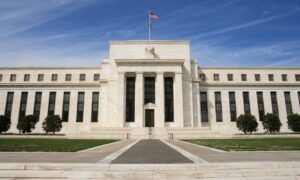
As we enter the new year, all eyes are on the Fed and its plans to avert a potentially crippling economic slowdown. Federal Reserve Governor Christopher Waller recently said he favored a 25 basis point hike at the next FOMC meeting, confirming market expectations. With that meeting approaching, what can we expect, and how can we achieve our goal of returning to 2% inflation?
Currently, the labor market is doing well, with the unemployment rate of 3.5% approaching a 50-year low and 223,000 net jobs created in December. However, beneath the surface, signs of an economic slowdown are everywhere, with major tech companies announcing tens of thousands of layoffs and other announcements every day. The latest economic data reveals several signs that have historically predicted economic recessions.
First, the index of leading economic indicators fell another 1%, after falling more than 4% in the previous six months. This index includes housing starts, which fell nearly 22% last year. The last two times this happened were during the Great Recession of 2008 and the COVID-19-induced recession of 2020.
Second, Treasury yields are now massively inverted. The current spread between the 10-year and 2-year Treasury bonds is 70 basis points. All ten previous recessions since 1955 were preceded by an inverted yield curve, except for one false positive in which an inversion led to an economic slowdown that was not officially declared a recession.
Third, in an effort to combat rising inflation, the Federal Reserve has been aggressively tightening monetary policy. Since last year, the FOMC has raised the Federal Funds Rate seven times, by a total of 400 basis points. All ten previous recessions were preceded by restrictive monetary policy and rising short-term interest rates. The prospect of an imminent recession makes it difficult, if not impossible, for the Fed to fulfill its dual mandate of price stability and maximum employment, at least in the short term.
This evidence suggests that an economic slowdown is imminent, if it isn't already here. However, is there any chance that the Federal Reserve will defy history and execute a soft landing? These so-called "stylized facts" of the U.S. economic cycle are just that: statistical observations that are true until they are. As the disclaimer given to investors states: "Past performance is no guarantee of future results." There are reasons why this time may be different.
For starters, the Federal Reserve's response to COVID-19, coupled with related supply chain disruptions, was a major cause of last year's high inflation. The Fed simply kept rates too low for too long while inflating its balance sheet. However, the pandemic's fallout is one reason the economy has not yet buckled under the pressure of the Fed's rate hikes. The development of effective vaccines and treatments against COVID-19 has unleashed pent-up consumer and business demand that was building during the lockdowns and layoffs of 2020.
The stabilization of the pandemic has alleviated many of the supply chain disruptions that plagued the shipping industry, particularly affecting US ports. Last month, China abandoned its "Zero-COVID" policy and eased pandemic restrictions, which should ease global supply chains. Furthermore, oil and energy prices are well below last year's peak. All of these positive supply-side developments will work to improve productivity. In fact, US labor productivity increased in the third quarter of 2022 for the first time in nearly a year. Productivity growth is key to economic growth with low inflation.
These reasons gave the Fed the cover to pursue much more aggressive tightening. But this also raises the following questions: did they raise rates too much or too little, and can the Fed plan for a soft landing, despite what history tells us? The path is narrow, but there are tailwinds for a soft landing.
So what should the Fed do now? There is growing evidence that inflation has already peaked and is falling. The CPI inflation rate is 6.5% year-over-year, down from a peak of nearly 9% in June 2022. December prices fell 0.1%, the smallest since May 2020, and the monthly average inflation rate over the past six months was 0.17%, annualizing to the Fed's 2% target. Furthermore, GDP growth was 2.9% in the fourth quarter of 2022. Despite what some mainstream media outlets claim, the Fed's goal is not to destroy jobs, but to contain inflation without destroying the economy.
Although the Fed made a policy error by failing to respond to earlier inflation signals, Chairman Powell's tough stance since then has done much to restore the FOMC's commitment to price stability. The central bank's credibility is crucial to anchoring inflation expectations and avoiding a self-fulfilling inflationary spiral. According to the New York Fed's Consumer Expectations Survey, inflation expectations are at their lowest level in 18 months.
Despite signs of declining inflation, the Federal Reserve has no reason to err on the side of being too aggressive rather than not aggressive enough. A lack of credibility is why the Fed's disinflation policies failed in the 1970s. Back then, the Fed took its foot off the accelerator when it thought inflation was under control. The result was that inflation returned with a vengeance, peaking above 10% twice, the second time worse than the first. High inflation took root and remained above 5% for nearly a decade. Clearly, this time the Fed needs to regain its credibility.
In light of these positive developments, it seems justified to moderate the pace of rate hikes to 25 basis points at the next FOMC meeting, January 31–February 1. However, the FOMC's statement and guidance should clearly state that its future policies will be data-dependent. Should the inflation outlook deteriorate, this should leave no doubt that rate hikes will continue in earnest.
It's understandable that the Fed wants to ensure it can put out the inflationary fire. While the water damage may be worse than the fire itself, putting it out will ensure it doesn't spread to the rest of the house. But if they can do both, Chairman Powell will have accomplished something few feds have done before.
This article was written by
Victor Li is a professor of economics at the Villanova School of Business. Previously, he was a Senior Economist at the Federal Reserve Bank of Atlanta and on the economics faculty of Penn State University and Princeton University.
Disclosure: We do not currently hold stock, options, or similar derivative positions in any of the companies mentioned, and we do not expect to open any such positions within the next 72 hours. I wrote this article myself, and it expresses my opinions. I receive no compensation for it (except from Seeking Alpha). I do not do business with any company whose stock is mentioned in this article.


