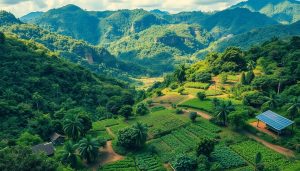
The country follows the 1987 "Our Common Future" report, which seeks to change production and consumption patterns. This effort was reinforced in 2012, demonstrating a commitment to a fairer and more responsible economy.
President Luis Inácio Lula da Silva emphasizes the importance of sustainable economyHe believes this will lead the country to a better future. Renewable energy and sustainable agriculture are examples of how this can be achieved.
Despite the challenges, 76% of companies in Brazil already adopt sustainable practicesThis shows that the circular economy is viable. Furthermore, 871% of Brazilians prefer brands that care about the environment.
What is Sustainable Economy?
THE definition of sustainable economy involves economic practices that care for the environment, the economy, and society. It aims to preserve the planet for future generations. Furthermore, it seeks to promote economic development and social well-being.
This concept is linked to the green economy. It highlights the importance of sustainability in economic activities.
Definition and origins of the concept
THE green economy emerged to address environmental challenges and create a responsible economic model. Academics like Ignacy Sachs and Ricardo Abramovay helped define this field. They proposed a system that balances growth and environmental conservation, with long-term human well-being in mind.
Principles of Sustainable Economy and their global relevance
THE sustainable economy is based on important principles. It includes efficient use of resources, innovation and respect for ecological limits, and social inclusion. These principles help conserve ecosystems and promote clean technologies.
Furthermore, they encourage policies for a fair distribution of wealth. The globalization of these principles is essential to protect the planet and improve life in many nations.
Agenda 2030 and the Sustainable Development Goals
The sustainable economy is linked to the UN 2030 Agenda. This agenda defines the Sustainable Development Goals (SDGs). They range from poverty eradication to action against climate change.
This entire process is based on an economic model that respects the limits of sustainable growth. This ensures that economic development improves wealth and promotes a sustainable and fair future.
Sustainable Economy in the Brazilian context
A sustainable economy is essential for the Brazil. It helps in economic and social growth. government policies in Brazil have an important role in this.
Government policies and initiatives for economic sustainability
Brazil has made great strides in policies for economic sustainability BrazilThese policies affect various sectors, such as energy and agriculture. For example, the country is investing in renewable energy.
Furthermore, the agroecology and sustainable forest management are growing. This helps the agricultural sector become more sustainable.
Brazil's position in the global sustainable development scenario
Internationally, Brazil is seen as a leader in green economyThis is due to its biodiversity and clean energy. International recognition strengthens policies. economic sustainability Brazil.
Policies that promote eco-efficiency and the circular economy are important. They help Brazil grow economically without harming the environment.
Environmental Impact: the role of the Sustainable Economy
The alarm about environmental impact made us think a lot about sustainable practicesIn Brazil, a sustainable economy is essential to protecting our natural resources. It seeks a balance between development and environmental preservation.
According to the UN, we produce more than 2 billion tons of waste each year. In Brazil, deforestation is a major problem. In 2021, we lost 1.5 million hectares of native forest, according to Global Forest Watch. This data highlights the urgency of shifting to more sustainable practices.
A sustainable economy aims to use natural resources responsibly. It includes adopting practices such as the paperlessThis model reduces paper use, helping to preserve forests and increase efficiency.
Many Brazilians want to reduce their environmental impact861,000 Brazilians want to do this, a higher number than the global average. Companies can seize this opportunity by offering products and services that value both the economy and the environment.
For Brazil, a sustainable economy is crucial. It must be integrated into all economic activities. Sustainable practices are essential to protect our resources and ensure a sustainable future.
Advantages of Sustainable Economy
A sustainable economy brings benefits in several areas. It combines economic growth, social justice, and environmental protection. Businesses and societies benefit from a more balanced and prosperous environment.
Social benefits: green jobs and reduced inequality
The shift to a sustainable economy creates green jobsThese jobs protect the environment and provide decent work. They also help reduce social inequality.
Sustainable practices improve equality. They provide fair access to economic resources and benefits. This helps reduce social inequalities.
Strengthening the economy and technological innovation
A sustainable economy makes the economy more resilient. In crises, sustainable countries and companies adapt better. Technological innovation emerges to solve sustainable problems.
New industries and clean technologies emerge. This improves international competitiveness. A sustainable economy is crucial for a healthy future.
Featured sectors and success stories
Brazil is standing out for its adoption of sustainable practices. This includes renewable energy Brazil, agroecology and waste managementThese actions improve the environment and strengthen the economy. They also demonstrate the country's commitment to sustainable development.
Renewable energy: success stories in Brazil
The expansion of renewable energy In Brazil, it's a huge success. The country is harnessing the sun and wind to produce more clean energy. This reduces dependence on fossil fuels and creates jobs, helping the economy.
Sustainable agriculture and agroecological practices
THE agroecology has made significant progress. It combines ancient techniques with new, sustainable practices. Small and large farmers are using methods that protect biodiversity and improve the soil. This approach ensures sustainable food and protects ecosystems.
Clean transportation and solid waste management
In the waste management, Brazil is making progress. Recycling and composting policies are reducing environmental impact. The promotion of electric vehicles is also helping to reduce carbon emissions.
These practices demonstrate the success of sustainability in Brazil. They serve as an example for other nations that want to develop sustainably.
Challenges for implementing the Sustainable Economy in Brazil
Brazil faces challenges of the sustainable economy as economic and social barriers. Despite having many natural resources, transforming them into sustainable economic advantages is difficult. This requires a profound review of sustainable infrastructure current.
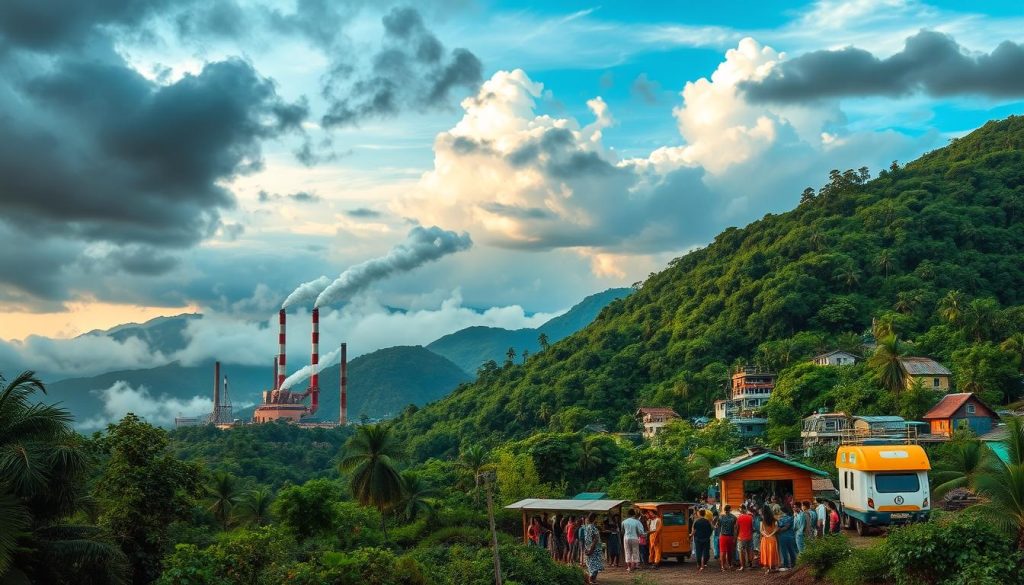
Economic barriers and the need for infrastructure investment
The high cost of cleaner, more efficient technologies is a major economic obstacle. Brazil also needs to invest heavily in sustainable infrastructureWithout this, the country continues to depend on methods that harm the environment and the economy.
Issues such as Amazon deforestation and soil erosion demonstrate the urgency of innovation in natural resource management.
Social impact and the inclusion of communities in the process
THE social inclusion is a major challenge for sustainable development. It is essential to involve local communities, especially those most affected, in decision-making. They should benefit from new employment opportunities and improvements in quality of life.
The population's lack of engagement and disinterest in sustainable change is a problem. More effective environmental awareness and education policies are needed. They should encourage active and informed community participation.
Sustainability and Capitalism in Brazil: How to reconcile them?
The debate between sustainability and capitalism in Brazil seeks a balance. We want economic growth and care for the planet to coexist. ecocapitalism shows a new way of doing business, which combines sustainability and profit.
The ecocapitalism model and its applicability
Companies that adopt the ecocapitalism They use technologies that protect the environment. They also seek market opportunities. For example, reducing waste and improving energy efficiency reduces costs and improves the company's image.
This attracts investors who value sustainability and look at ESG criteria, i.e., environmental, social, and governance.
Discussion on the commodification of nature
The concept of commodification of nature raises ethical concerns. We question to what extent the market should influence the management of natural resources. Some argue that putting a price on nature can diminish its true value and increase social inequalities.
It is crucial to distinguish between genuine efforts to greenwashingGreenwashing occurs when companies pretend to be more environmentally friendly than they actually are. This compromises transparency and long-term reliability.
So that the ecocapitalism is beneficial, joint action by companies, civil society, and governments is essential. They must ensure that the benefits of ecocapitalism do not become new forms of exploitation.
In short, as Brazil explores ecocapitalism, it's crucial to create mechanisms that make sustainability a reality. It shouldn't be just a market instrument.
Conclusion
A sustainable economy is essential for the progress of the Brazil. It combines economic development, environmental protection, and social well-being. Thus, the country stands out globally as an example to follow.
In the areas of renewable energy, agriculture, and waste management, Brazil shows a promising path. These initiatives are essential for sustainable and lasting growth.
After important events, such as the Rio+10 Summit in South Africa, Brazilian companies changed. They began adopting sustainable practices. This includes waste reduction, the circular economy, and the use of renewable energy.
These changes demonstrate that companies are more aware of their responsibilities. They are committed to the environment, the economy, and society.
The future of sustainability is increasingly present in Brazil. Conscious consumption and the demand for sustainable products are growing. This shows that people are more aware of the environment.
Sustainable practices are expected to remain a priority. This will ensure a better future for future generations. It will also serve as an example for other countries.