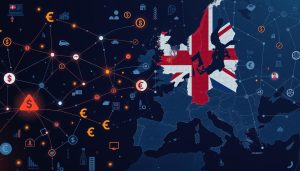
The United Kingdom's exit from the European Union has impacted the global economy. In addition to a health crisis and problems in the energy sector, managing the economy has become even more difficult.
Trade between the UK and the European Union used to be a significant source of income. Now, more than half of businesses are struggling with new regulations. This is reducing exports and causing food prices to rise by up to 6%, putting a strain on the economy during times of high inflation.
The United Kingdom's exit from the European Union affected more than just trade. Investments became uncertain and could have been 25% higher without the Brexit 2016. There is a shortage of 330,000 workers in important areas, but the financial sector has held up better than expected.
With the Brexit, the UK's gross domestic product (GDP) decreased by 4%, according to studies. This resulted in less investment than expected. And the diversity of products exported to the EU fell by 30%. Few companies saw the Brexit as something good to grow and sell more.
The UK's exports and imports from the EU have fallen sharply. Trade in the country's GDP suffered the most compared to the G7 countries. The British economy lost billions in taxes. This highlights the significant impact of Brexit on the country's economy and the global challenges that lie ahead.
Impact of Brexit on the UK Economy and Trading Partners
THE post-Brexit British economy faces significant challenges. These challenges affect not only the United Kingdom but also its relations with the world. The drop in exports to the European Union highlights how complex the situation is.
Despite the recovery, the numbers are still lower than previously expected. This highlights the difficulties in economic recovery.
Compared to G7 countries, the United Kingdom has seen a decline in its international trade. This indicates a loss of efficiency and competitiveness on the global stage. Brexit has changed the way we trade with Europe and brought new logistical challenges.
The impact of Brexit on the UK will affect GDP and the labor market. The economy could shrink by approximately 4% in the long term.
The country remains strong in exporting services, surpassing the G7. Only the United States is a larger exporter of services than the United Kingdom.
Social and economic problems have also increased. Wages are stagnating and there are more unemployed people due to chronic health issues.
Universal Credit has been used primarily to help people with their living conditions. This highlights the reliance on government support by workers and families.
Thus, the global impact of Brexit is evident in both foreign trade and internal problems. Adjustments and changes are part of the new reality of post-Brexit British economy.
The UK's Trade Response After Leaving the European Union
After the decision to leave the European Union, the British foreign trade encountered many doubts and challenges. UK businesses and entrepreneurs had to reinvent themselves. They faced a new and complicated scenario, full of new post-Brexit trade rules.
Adaptations and Challenges for British Companies
Leaving the EU forced British companies to adapt to new commercial laws. This brought with it more paperwork and bureaucratic processes. A survey showed that more than half of companies still have problems. They struggle with the complexity and increased costs of this new way of doing business.
Implications of New Rules and Bureaucracy in Commerce
To the new post-Brexit trade rules affect the speed and cost of trade operations. Small exporters felt a significant disadvantage. They face challenges such as unexpected delays and additional costs. This makes it difficult to maintain trade with the EU and elsewhere.
UK and G7 Post-Brexit Trade Relations
After Brexit, the G7 trade relations with the United Kingdom have declined. Compared to G7 countries, the UK's recovery is slow. This highlights the challenges and slowness of trading partners in adjusting to new market models. Improving these relations is key to the UK's economic stability in the world.
Challenges of the Post-Brexit Global Economy
The world is adjusting to the new scenario of post-Brexit global tradeIt's not just the UK that's facing problems. The global economy is facing challenges, affecting supply chains and trade agreements. post-Brexit business challenges show the effect of rules and policies. They impact local markets and the global economy.
Small businesses are finding it difficult to enter the foreign market now. They already faced a lot of bureaucracy. Now, they see their exports, especially technology exports, falling. This shows how urgent it is to rethink strategies for the future. post-Brexit global trade.
Brexit brought uncertainty to international transactions. This changed growth expectations. The UK has high debt, more than many European countries. Challenges now include new border controls. These can cause delays and disruptions in supply chains. This makes it difficult to recover productivity and economic growth.
Brexit affects far beyond the UK. It changes markets and business strategies worldwide. Governments are trying to stabilize their economies. Businesses need to be innovative and adapt to new international rules. It's a constant effort to mitigate the impacts of this major geopolitical shift.
UK Trade Agreements and Their Effects on International Relations
After Brexit, the UK made 71 trade deals. These deals look very similar to the old ones, pre-Brexit. This makes people wonder if they actually change anything in the world or in the UK's position on trade.
New Agreements and Their Long-Term Consequences
The United Kingdom has reached agreements with Australia and New Zealand. These agreements demonstrate the country's desire to expand its relations. However, they are small compared to potential agreements with larger countries, such as the United States and China. This highlights the need for the United Kingdom to seek stronger partnerships on the global stage.
Evaluation of Repeated Commercial Agreements
The new trade agreements are very similar to those before Brexit. This raises questions about the benefits of these new partnerships. With the economy struggling and exports not performing so well, the UK needs to go beyond repeats. It must seek agreements that truly bring new trade opportunities.
Ongoing Negotiations and Their Potential Impacts
The United Kingdom is negotiating with India and Pacific Rim countries. These negotiations could change the effects of Brexit. Still, it's unclear what the outcome will be or whether they will offset the losses of leaving the European Union. This uncertainty raises questions about whether the post-Brexit strategy will work.
With economic hardships to face, post-Brexit agreements need to be carefully considered. They should strengthen the UK's international relations and help the economy recover after the pandemic.
Investment in the UK After Brexit and Its Economic Impact
The United Kingdom's exit from the European Union has changed the landscape of post-Brexit investments. After the 2016 referendum, there was a halt in investment. If pre-Brexit trends had continued, there would be 25% more investment today.
Economic analyses show that post-Brexit uncertainty affects business decisions. Additional bureaucracy complicates operations and encourages caution regarding new investments. Studies indicate that 751,000 British companies saw no benefit from Brexit. Furthermore, inflation is facing the highest level in four decades.
There is a significant gap between expectations before Brexit and the current situation. Investment in the UK has fallen to 9% of GDP. This is lower than the average of 13% among the G7 countries. The quest for economic recovery is complicated and uncertain.
Changes to the Labour and Immigration Framework with Brexit
After Brexit, big changes happened in workforce in the UK. Affected the immigration and employment. Sectors such as financial services were heavily impacted.
Impact on the Financial Services Sector and Employment
Job losses in the financial sector were significant, but not as much as expected. Around 7,000 positions were lost, far below the 70,000 expected. Changes in immigration rules were part of this, complicating the hiring of foreigners.
Sectors Affected by Changes in Worker Circulation
Transportation, hospitality, and retail also suffered from a labor shortage. There were 330,000 unfilled jobs, forcing companies to train more people locally. In healthcare, despite more visas for professionals, there is still a shortage of 150,000 workers.
Effects of Labor Restrictions on Companies
With fewer workers, the prices of services and products have risen, directly impacting consumers. UK companies are now seeking to adapt to the tight labor market.
Economic Consequences of Postponing Health and Safety Controls
The challenges of Brexit impact several areas of the UK's economy. Among them, the delay in implementing health and safety controlsThe British government has repeatedly postponed these measures for food imported from the European Union. This was in response to fears of supply disruptions and rising food prices.
UK producers face comprehensive EU checks, while the same is not true for imports. This difference highlights the complications facing post-Brexit trade. It also highlights the challenges facing British traders.
This difference in rules has significant effects on the economy. It affects the stability of the UK market. Small farmers and producers, especially those trading with the EU, are the most impacted.
The uncertainty about the health and safety controls drives away investors and business partners. They face changing and difficult-to-predict rules.
Postponing these measures aims to avoid supply and price issues now. However, this strategy could lead to serious economic problems in the future. British companies could end up at a disadvantage in the global market.
Inflation and Cost of Living Crisis in the UK as a Reflection of Brexit
Post-Brexit inflation has made life in the UK more difficult. The cost of living has risen. Since leaving the European Union, economic problems have affected the country, particularly food prices. Studies show that Brexit is responsible for a third of the increase in food prices since 2019. This has added nearly £7 billion to British food spending.
The United Kingdom has the highest inflation among the G7 countries. Supermarkets have begun rationing essential items as a result. Higher prices and dependence on imported goods are making the country feel these impacts more acutely.
Food Price Inflation and Its Impact on Consumers
Food inflation worsens the cost of living crisis. Families with less money suffer more, as they spend more on food. With less purchasing power, many struggle to cover basic needs. This raises social and economic concerns in the UK.
Delay in Resolving Costs and Losses After Brexit
The solution to the problems caused by post-Brexit inflation It's taking a long time. Negotiations continue, facing several challenges. Uncertainties about future trade and political relations with the EU and other countries complicate the situation.
It's clear that without swift and effective action, the British will continue to face economic hardship. Adapting to this new economic reality requires effort from the government, businesses, and the public. They need to change their consumption, production, and economic policy strategies.
Product Rationing: Supermarket Measures and Social Impact
THE product rationing in the UK Brexit has changed people's lives. Supermarkets are limiting the number of fruits and vegetables purchased. This is due to climate issues and new border regulations.
With Brexit, importing products from the EU has become more difficult. There are additional inspections, which delays deliveries. Almost 40% of the vegetables consumed in the UK come from Europe. The prices of these products are rising, which is a burden on the population.
Families need to change what they consume. Small businesses are struggling to survive.
There's a movement in the UK seeking greater food independence. But there's a shortage of agricultural workers, another effect of post-Brexit rules. This highlights the importance of reviewing trade and agricultural policies.
Conclusion
Brexit has significantly changed the situation for the UK and the global economy. Many experts have discussed it, with several studies focusing on its global impact. Approximately 45% of these studies examine the legal and political impacts, demonstrating the complexity of this issue.
Nearly 25% of these papers analyze how Brexit affects markets and businesses. There was a 67% increase in articles on this topic after 2016. This reflects the growing concern since the Brexit vote. These analyses are important, especially when we consider global challenges and cooperation between countries.
Economically, Brexit caused significant instability. For example, price indexes in Brazil rose significantly after the vote. Investments also experienced mixed results, with some losing value. This demonstrates Brexit's significant impact on the global economy, an effect that continues to evolve and be debated.