THE pandemic Covid-19 worsened Brazil's economic situation, with GDP falling 3.8% in 2020. But in 2021, the country began to recover, with a GDP growth of 4.62%. This shows the recovery potential and the interest in investing in Brazil.
Brazil is diverse and full of opportunities. We are seeking our place in the world, with policies that support domestic production and attract foreign investment. This growth is the beginning of an analysis of how Brazil is becoming a global force.
GDP Retrospective and Crisis Scenarios
The Brazilian economy has faced severe crises in recent decades. These crises significantly affected Gross Domestic Product (GDP). Understanding these periods helps us understand the cycles of recession and economic recovery in the country.
Impact of the 2014-2016 Recession on Brazilian GDP
Between 2014 and 2016, Brazil experienced a serious recessionThere was a decline in economic activity, with GDP falling by 0.4% per year. Factors such as political instability and falling commodity prices contributed to this recession.
The recession caused by Covid-19 and its economic consequences
THE pandemic The Covid-19 pandemic, which began in 2020, brought significant challenges to Brazil. It caused GDP to fall by 3.81 trillion pounds that year. The impact was significant, affecting everyone from small businesses to large corporations, reducing consumption and investment.
2021 Economic Recovery and GDP Growth
In 2021, Brazil began to recover from pandemic. This year saw a GDP growth, showing the strength of the economy. The agriculture, services and industry started to grow again, helping the economy to recover.
International Comparison of Economic Development
Analyze the economic development of countries is essential to understanding their global position. Using indicators such as the GDP per capita and the productivity, we can see how each country grows. This helps to understand the strategies for economic growth.
Brazil's GDP per capita in relation to the United States
Compare the GDP per capita of Brazil with that of United States shows big differences. Brazil has about 25% of GDP per capita of the United States. This shows the difference in wealth and economic development between the two.
This comparison is crucial to understanding where Brazil can improve. It shows the importance of economic policies and social for development.
Growth in Brazilian worker productivity compared to high-income countries
Comparing the productivity of the Brazilian worker with rich countries, we see a challenge. Brazil grew 17% in the last 20 years. Developed countries grew about 34%.
This difference shows that Brazil has a lot of room for improvement. Investing in technology, education, and infrastructure is essential to achieving high levels of efficiency higher.
The Quality of the Regulatory Environment in Brazil
THE regulatory environment in Brazil is a great challenge for the economic growthSince 1950, approximately 94,000 standards have been created. This means that Brazil has four new standards every day.
This situation not only challenges the efficiency of business, but also increases the legal uncertaintyThis raises the costs for companies to do business.
The regulations are numerous and complex. This is especially true in the transportation sector, which has seen an increase of 80% in recent decades. This is why Brazil ranks 46th out of 48 countries in the OECD in terms of regulation.
A large part of this problem stems from the linguistic complexity of the regulations. Since 1964, this has worsened significantly. But recently, there has been some relief in sectors such as agriculture.
This situation affects the quality of regulatory environmentSince the 1988 Constitution, sub-legal regulations have increased fivefold. Ten economic sectors have become more restrictive. This demonstrates the urgent need for reforms to make regulations clearer and more efficient.
The National Regulatory Policy Strategy is a step in this direction. It seeks to reduce regulatory complexity and thus create a better environment for economic growth and innovation.
To improve the legal uncertainty and the efficiency In economic terms, it is essential to simplify and reduce bureaucracy. These changes are crucial to attracting investment and strengthening Brazil's economy in a competitive world.
Brazil's Position in the Global Competitiveness Report
THE Global Competitiveness Report shows that Brazil has had its ups and downs. In 2004, the country was in 49th place. It has since improved, but still faces challenges.
Between 2007 and 2010, Brazil improved significantly. However, there is still much to be done to become more competitive. In 2022, Brazil ranked 60th, better than South Africa. BRICS.
Brazil's competitiveness compared to BRICS and Latin American countries
THE Competitiveness Report shows that Brazil has a long way to go. China and India, BRICS, are far ahead. In Latin America, Chile is the only one that is not far behind.
The weight of government regulations and their impact on the economy
To the government regulations are a major problem for Brazil. They are very complex and bureaucratic. This greatly affects small and medium-sized businesses.
To improve, Brazil needs reforms. This would help the economy and people's lives. Improving competitiveness global brings more business and job opportunities.
OECD and Competition Prospects in the Brazilian Market
Brazil joined the guidelines of OECD, a big step towards regulation and competition. Although the Brazilian market has not yet adopted all the recommendations of the OECD, efforts to align with international standards are clear.
These guidelines aim to ensure fair competition and avoid practices that limit competition. The Recommendation of the Council on Evaluation of Competition of 2019 seeks to improve public policies. This helps prevent market concentration, which can harm consumers and innovation.
The OECD also provides tools to assess the competitionThey help governments identify and remove barriers to new competitors. These tools promote a fairer and more competitive business environment in Brazil.
Despite the challenges, the OECD predicts a GDP growth Brazilian. GDP is estimated to grow by 1.9% in 2024. This shows a economic recovery slow.
Partnership with the OECD can raise standards of competition and regulation in Brazil. This can create an environment where competitiveness and the efficiency economic promote strong and sustainable growth for the Brazilian market.
Regulatory Advances Aiming to Improve the Business Environment
In Brazil, there are new laws to improve the business environment. Economic Freedom Act It's a big step. She wants to reduce bureaucracy and make laws easier to follow.
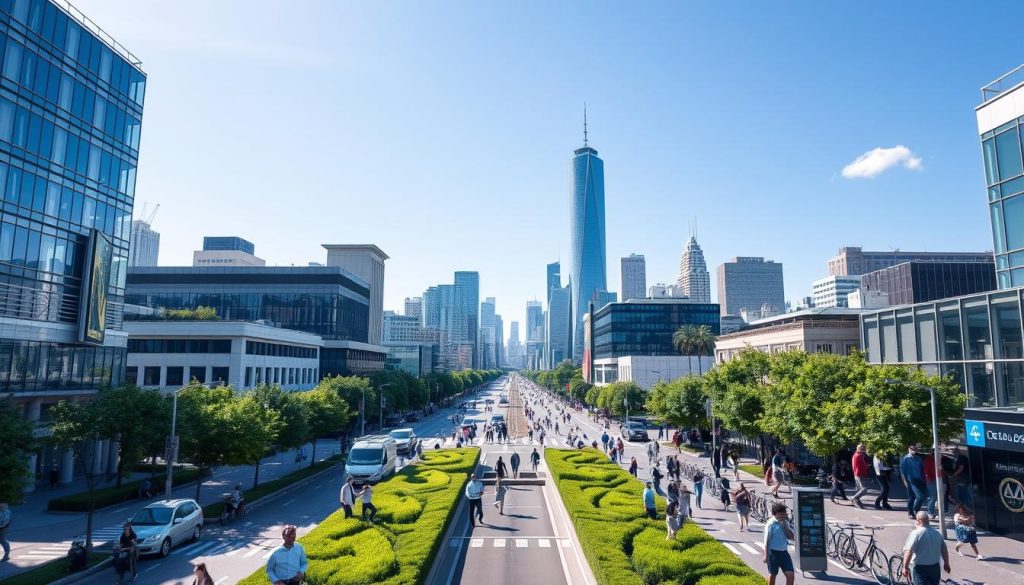
To the regulatory agencies are essential to these changes. With the National Strategy for Regulatory Improvement, the government aims to improve the rules. This will help make Brazil more competitive in the world.
Recent legislation to boost economic freedom and regulation
New laws are creating a freer business environment. Federal Decree No. 12,150/2024 is one example. It helps Brazil grow economically and integrate with the world.
Implementation and impacts of regulatory agencies and business laws
Regulatory agencies are very important now. They help enforce the new laws. With more than 200 agencies, Brazil can improve a lot.
With these changes, the productivity in Brazil is rising. This improves the competitiveness and economic growth. Brazil becomes stronger in the economic world.
Innovation as a Vector of Economic Growth
THE innovation is essential for sustainable economic growth. It drives the economy with knowledge and technology. Investing in innovation is crucial to market leadership. National Innovation Policy wants to position Brazil as a global leader, improving its capacity to innovate.
Fostering innovation: regulatory measures and investments
THE National Innovation Policy brings several measures to stimulate research and development. It recognizes innovation as key to competitiveness. The government has increased funding and created conditions for companies and universities to collaborate on innovative projects.
These efforts seek to change the economy and create a cycle of growth and development.
Brazil's performance in the Global Innovation Index and the need for integrated policies
Brazil has advances and challenges in Global Innovation Index. Although progress has been made in some sectors, an integrated policy is needed. This would help overcome difficulties and make innovation initiatives more effective.
Improving these strategies and increasing cooperation between the public and private sectors could elevate Brazil in innovation rankings. This would solidify its position as an advanced and dynamic global economy.
Recent Analyses of Brazilian Economic Growth
The Brazilian economy is recovering. Recent data shows that the country is strong in the face of challenges. industry and services are growing, while the agriculture faces climate problems.
Performance of the Industry and Services Sectors
GDP grew by 1.4% in the second quarter of 2024. industry rose 2.8% and the services grew 3%. These numbers exceed expectations, showing that the economy is strong.
Household consumption and government spending helped significantly. Gross Fixed Capital Formation rose 2.7%, but this did not impede growth.
The Role of Agriculture in the Economy and Climate Influences
THE agriculture experienced a decline of 3% in the same period. Rio Grande do Sul, which represents a large part of the economy, was severely affected by a climate disaster. This disaster could have a significant impact on the country's economy.