
These changes can improve the economy and society. They will unify state and local tax laws. This will make things simpler and fairer for everyone.
With these changes, Brazil can grow more and create more jobs. This will be possible thanks to new laws such as the Goods and Services Tax (IBS) and the Social Contribution on Operations with Goods and Services (CBS).
This reform will make the tax burden fairer. This will help the country's productive sector. And it will improve the relationship between the state and its citizens.
Furthermore, the reform will end the tax warThis war greatly harms the relationship between states and fair taxation.
It's important that the new law doesn't cause taxes to accumulate. This would help reduce the burden on investments. This would improve conditions for all sectors—industry, commerce, and services.
THE Tax Reform is coming. With it comes the hope of a more just and transparent Brazil.
Understanding the Current Tax System and the Need for Reform
The Brazilian tax system is very complex and in need of change. Since 1966, it has levied numerous taxes across different areas. This creates significant bureaucracy and regional differences.
The complexity of the tax system and its economic impacts
Tax laws, such as the ICMS (Tax on Goods and Services), create barriers for companies. They increase operating costs, which affects the country's economic competitiveness.
One proposal is to unify five taxes into one. This could reduce complexity and boost economic growth. Growth could reach 10% in the next decade.
The high burden of legislation and the cost of compliance for companies
1.2% of companies' costs go to tax compliance. This demonstrates the burden of current legislation. tax reform can change that.
With a final VAT rate of 27.5% in the current VAT model, requirements would be reduced. This would help make the business environment more dynamic. Investments are planned for the transition, with special funds and legislative adaptations.
Therefore, tax simplification and reduction are urgent. They directly impact Brazil's sustainable development.
Central Objectives of Tax Reform
THE tax reform in Brazil is crucial for a fair economic environment. It aims to address three key issues. These issues are essential for the country's social and economic growth.
Sustainable growth and job creation
One of the pillars is to promote the economic growth sustainably. Simplifying tax processes reduces bureaucracy. This reduces costs for companies and stimulates the creation of new jobs.
GDP is estimated to grow by 12% in 15 years. This could result in the creation of up to 12 million new jobs.
Equity and social justice in tax collection
THE tax equality is an essential goal. Tax unification and tax cashback for low-income families aim to distribute the tax burden fairly. This helps reduce social inequality and strengthens the local economy.
Transparency and fiscal citizenship through tax simplification
THE tax reform aims to unify five taxes into just one or two. This brings more clarity to tax application and their benefits. It is expected to increase tax awareness and encourage citizen participation in tax and governance issues.
The Value Added Tax (VAT) Model and Its Implications
THE Value Added Tax (VAT) It has changed the way taxes are collected in many countries. More than 170 countries, including major economies, have adopted VAT. In Brazil, it is seen as a solution to simplify the tax system, which has more than 90 taxes.
In the Brazilian tax reform, a proposal is made Dual VAT. It combines the Contribution on Goods and Services (CBS) federal with the Goods and Services Tax (IBS) state and municipal. This change aims to make the system fairer and less burdensome for companies, charging tax only on final consumption.
The average VAT rate in Brazil would be 27.97%. There will be variations for different sectors, such as healthcare and education. During the transition from 2026 to 2032, the current system and the new VAT will coexist. Full VAT implementation will be by 2033. This period is crucial to adjust everything and avoid overburdening taxpayers.
The model of Value Added Tax It also simplifies tax collection. It aims to eliminate cumulative taxation, where each stage of production pays value-added tax. This will reduce cascading taxes, making taxation fairer and the business environment more competitive.
Changes in Tax Legislation and the New Tax Arrangement
With the approval of Constitutional Amendment 45/201, Brazil is changing its tax laws. This change will replace old taxes with new ones, such as CBS and the IS. The goal is to make the system simpler and more efficient.
Replacing PIS, Cofins and IPI with CBS and IS
The PIS, COFINS, and IPI taxes will be eliminated. They will be replaced by the CBS and the ISThis will help companies pay less taxes and have less bureaucracy.
The emergence of the IBS and the unification of consumption taxes
THE IBS is a new law that will unify the consumption taxesThis includes federal, state, and municipal taxes. The goal is to make everything fairer and make life easier for businesses.
The reform will also create special rules for sectors such as healthcare and education. This will help make the country fairer for everyone.
The change will begin in 2027. It will make Brazil more competitive in the world. Everyone will benefit, making society more just.
Economic Impact of the Reform on Various Market Spheres
Brazilian tax reform will change the country significantly. It will affect both industrial sector as the service sectorThe Goods and Services Tax (GST) can make companies work better in Brazil and around the world.
Implications for the industrial and service sectors
Node industrial sector, the reform can simplify taxes. This can reduce costs and increase investment. service sector may face a tax increase. It's important to take care of this so as not to negatively impact the provision of services.
Consequences of the reform for Brazil's international competitiveness
The IBS can make Brazil's tax system fairer. This can help reduce Brazil's global cost. This change is essential to making Brazilian products more competitive in the global market.
Tax Reform: A Path to Reducing Social Inequality
Tax reform in Brazil could be a solution to the social inequalityIt aims to make the tax system fairer and more progressive. This could change people's lives in the country.
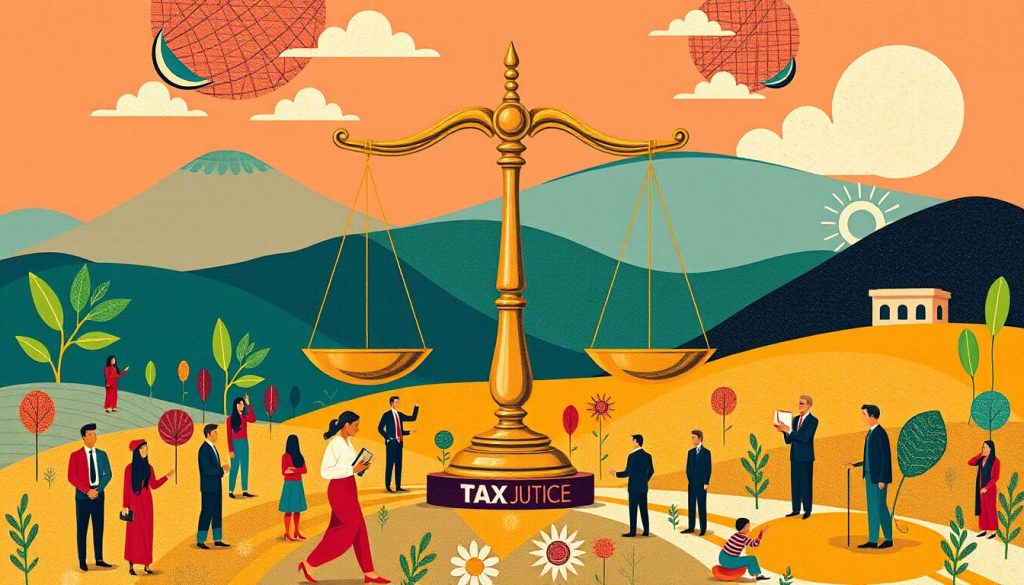
One of the changes is in the distribution of taxes. Currently, the poor pay more. progressive taxation and tax cashback are proposed to help.
The role of progressive taxation in income distribution
THE progressive taxation will charge the rich more. This helps fund important public policies. Thus, income is distributed more fairly.
This change also contributes to sustainable development. The tax system becomes an ally in the fight against inequality.
Tax refund mechanisms as an instrument of tax justice
Tax cashback is one example. It helps the poor have more money to spend. This is good for the economy.
According to the World Bank, this is more effective than exempting basic products. tax justice in Brazil it can improve a lot with these changes.
With the progressive taxation and cashback, Brazil can set an example for other countries. This can lead to a more just and egalitarian society.
Challenges and Strategies for Corporate Tax Planning
Corporate tax planning is essential for the financial health of companies. Adapting to the new tax system is crucial these days. Research shows that most companies are beginning to adapt, with 90% expecting a significant impact on operations.
This complex change requires companies to understand and prepare for the new Goods and Services Tax (GST) rules. More than half of companies will invest more in tax management over the next two years. Furthermore, 62% plan to increase investment in processes and external consulting.
Furthermore, more than 40% of companies expect an increase in investment in tax management over the next nine years. This shows that preparing for the new system is a long-term trend. Investing in the next six months will be essential to align tax operations with the new requirements.
To successfully adapt to the new system, companies need a comprehensive strategy. This includes reviewing tax operations, investing in talent, and leveraging new technologies. With 51% of companies planning to invest more in training, capacity building will be crucial to overcoming the challenges of the reform.
So, create a corporate tax planning Being strong and adaptable is essential. It's not just an immediate necessity, but a strategy for long-term success in Brazil.
Tax Reform and its Effects on the Collection of Federative Entities
The tax reform will significantly change Brazil's tax system. It seeks to simplify tax collection. This is expected to result in a fairer distribution of revenue among states.
The Goods and Services Tax (GST) and the Selective Tax are new. They combine several taxes into one, based on the destination of the products and services. This helps eliminate tax war between states.
With clearer tax rates and tax locations, revenue collection becomes more predictable. This brings transparency to federal entities.
The debate on the distribution of tax revenues
The reform also sparks discussions about how to share revenue. Without tax wars, states need to find fair ways to divide the tax pie. This helps promote regional growth and balance economic differences.
The tax war between states and the unification of the IBS
One of the main objectives of the reform is to end the tax warThe IBS seeks to establish clear rules for taxation. This reduces tax conflicts and encourages healthy competition between states.
The Future of the Tax Burden in Brazil and Business Competitiveness
The debate on the future of the tax burden in Brazil is increasingly intense. This is happening with tax reform approaching. tax rates are a key point, as they directly impact the business competitiveness.
With significant changes planned, the reform seeks to correct distortions in the current system. However, this raises concerns about potential tax increases, especially for essential sectors of the economy.
Small and medium-sized businesses in the trade and services sector are concerned. They say the changes could significantly increase their tax burden. This would affect more than 90% of CNDL companies.
This increase could reduce the competitiveness of these companies. They depend on the Simples Nacional tax regime to operate. This could harm job creation.
Pressures for fairer tax rates and issues of excessive tax burden
Maintaining fair tax rates is crucial. This is evident in the statistics that show a possible increase in taxation. service sector, for example, could see its tax burden increase to up to 26.5% on the presumed profit.
This increase could transfer additional costs to consumers, reducing purchasing power and affecting the economy as a whole.
On the other hand, tax reform brings hope for improvements. For example, equalizing rates in the sanitation sector could benefit millions of families. But it's important to ensure these benefits aren't overshadowed by an overall increase in the tax burden.
Understand the implications of the new tax rates is essential. This prepares the country for a future of the tax burden that promotes stability and economic growthA robust and competitive business environment is essential for this.
Tax Reform: A Critical Assessment of Legislative Proposals
Tax reform in Brazil faces many challenges. legislative proposals need to be carefully analyzed. Proposal PLP 68/2024 suggests a 10-year transition period.
Important figures, such as Senator Oriovisto Guimarães, warn of the challenges ahead. They say companies will have to deal with two tax systems.
The senators' deliberation and the approval of tax reform
The senators are discussing the tax exemptionsExperts, like Senator Guimarães, are concerned about the increase in the tax burden. This could affect the service sector, which employs many people.
The Chamber of Deputies swiftly approved PLP 108/24. This demonstrates the importance of listening more closely to stakeholders' opinions. The reform, which has been under discussion for almost 40 years, still has many issues to be resolved.
Questions about tax exemptions and effectiveness
Many tax proposals focus on exemptions for specific groups. This creates inequalities. In 2019, tax disputes reached 75% of GDP.
There is a movement to create an equitable steering committee for the IBS. This aims to include more women and end the tax warHowever, distributing revenue fairly among federal entities is a major challenge.
A study shows that eliminating the ISS (Service Tax) could benefit municipalities with lower revenues. However, the idea of a fair and efficient tax reform is still a topic of debate.