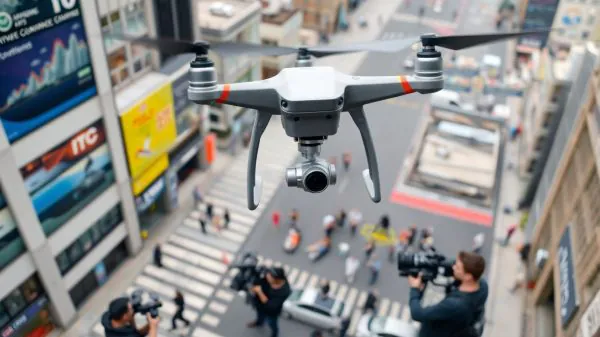
In Brazil, the smart cities are changing the way we live. They use urban technologies and innovation to improve people's lives. Metropolises like Curitiba and São Paulo are leading this movement.
These cities want to make everyday life better. They strive to create safer and more efficient places. São Paulo and Campinas are examples of success, according to the Connected Ranking. Smart Cities 2022.
Florianópolis stands out for its safety and mobility. São Caetano do Sul is known for its education and governance. São Paulo is also improving its mobility and economy.
Quality public transportation and entrepreneurship are essential. Campinas demonstrates the dynamism of smart cities in the economy. The Free Energy Market helps you choose sustainable energy sources.
The rise of Smart Cities in the Brazilian scenario
Brazil is changing rapidly, thanks to smart cities. These smart cities focus on being sustainable and efficient. They are preparing for the challenges of urban growth and improving the lives of residents.
Cities like Curitiba, Florianópolis, and São Paulo are leading the way. They adopt advanced technologies, such as efficient public transportation systems. They also take better care of the environment and save energy by using LEDs instead of conventional bulbs.
These actions help the environment and drive economic and social growth. Technology, such as the Internet of Things (IoT), improves the management of public services. This is essential for dealing with the rapid growth of cities.
Investing in digital infrastructure is crucial. Smart tools help cities become more resilient. This improves urban life, aiming for a safe and inclusive future for all.
Therefore, the growth of smart cities in Brazil demonstrates the importance of a balanced approach. It's necessary to combine technology and sustainability to find effective solutions. This benefits both municipal management as the general population.
Concept and Pillars of Smart Cities
To the smart cities or smart cities are essential to improving urban life. They use technology and data to optimize resources and infrastructure. This improves residents' quality of life.
This new form of city makes life easier and promotes sustainable growth. It also strengthens community unity. To function well, it requires careful planning and strategic execution.
The role of technology and innovation in municipal management
Technology and innovation improve public services and make governance more open. They use geographic information systems and digital platforms. This significantly improves public administration.
With these tools, cities can better respond to citizens' needs and become more capable of tackling complex urban challenges.
Sustainability and environmental responsibility
To the smart cities focus on sustainability. They implement strategies to manage waste and reduce carbon emissions. This helps protect the environment.
This environmental responsibility doesn't mean giving up innovation. Technology is used to monitor and manage environmental impact. This way, growth is balanced with conservation.
Urban mobility and strategic planning
Smart urban mobility is crucial. Data-driven planning creates an efficient transportation network. This includes public transportation, sidewalks and bike lanes, and incentives for electric vehicles.
These actions improve transportation efficiency and reduce congestion. They also improve air quality and increase accessibility to essential services.
To the smart cities combine innovation, management, and sustainability. They promise a future where technology and urban strategy work together. This creates more resilient, inclusive, and sustainable cities.
Integrating these elements is essential to addressing population growth and environmental challenges. This allows cities to maintain quality of life and resident satisfaction.
Community Integration and Participatory Governance
Increasing urbanization shows the importance of participatory governance and community inclusion in smart citiesThey are essential to addressing the challenges and harnessing the benefits of cities. In Brazil, more than 75% of the population lives in cities. This makes it crucial to listen to all voices in shaping urban life.
Smart cities go beyond new technologies. They also seek an environment where participatory governance is a daily practice. This model improves interaction between citizens and public officials. This makes management more effective and better meets local needs.
Citizen participation in urban decisions strengthens community ties. It also increases trust in public institutions. Cities that invest in participatory governance and community inclusion improve quality of life.
The union between technology and participatory governance improves resource management. This makes management more transparent and accessible. Modern tools, such as the digitalization of public services, help strengthen participatory governance.
In short, participatory governance and community inclusion are essential for Brazil. They are fundamental to a fair and high-quality urban environment. They prepare the country for an inclusive and progressive urban future.
Impact of Urban Technologies on Economic Development
To the urban technologies are essential for the economic development of smart cities. They improve infrastructure and create an innovative environment. This is crucial for sustainable economic growth.
Artificial Intelligence (AI) and the Internet of Things (IoT) are examples of advanced technologies. They optimize resources, reduce costs, and improve quality of life. This encourages entrepreneurship in smart cities.
Strengthening local entrepreneurship
To the smart cities attract investment in startups and technology companies. This creates new economic opportunities and stimulates entrepreneurship. The innovation ecosystem in cities stimulates the creation and growth of local businesses.
This reduces the unemployment rate and strengthens the local economy.
Technological attractions and job market growth
Invest in urban technologies is investing in human potential. New technologies increase the demand for specialized skills. This promotes growth of the labor market.
Initiatives such as big data analysis and the development of smart solutions are examples. They prepare cities and their inhabitants for an economically viable and technologically advanced future.
The Role of Smart Mobility in Smart Cities
More than half of the world's population lives in cities. Therefore, smart traffic solutions are essential. This helps address growing population density and mobility challenges.
Innovations in public transportation are crucial for smart cities. This concept has grown significantly in recent decades.
Smart traffic light systems are a prime example. They use technologies like the Internet of Things (IoT) to improve traffic flow. This not only improves traffic but also helps reduce pollution.
Public transport and traffic solutions
Smart cities use advanced technologies to improve urban mobility. Public transportation is essential. Technologies allow for real-time tracking of buses and trains.
This improves the efficiency of public transportation. It allows citizens to better plan their trips. This improves quality of life and productivity.
Promoting sustainable vehicle use
Smart cities also encourage the use of sustainable vehicles. Examples include bike-sharing and electric car-sharing programs. They help make the city greener and less dependent on fossil fuels.
These initiatives reduce the carbon footprint and promote a culture of environmental responsibility. This way, smart cities face their challenges and prepare for the future.
Challenges and Solutions in Technology and Connectivity
To the smart cities in Brazil are growing rapidly. They are using new technologies to become more integrated. But they face challenges in smart cities as the urban connectivity.
To overcome these challenges, the adoption of advanced technologies is essential. Software-Defined Networking (SDN) and Network Function Virtualization (NFV) are crucial. They help address the complexity of cities.
A major challenge is ensuring internet access for everyone. In 2023, 841,000 Brazilians had internet access. However, 29 million still lack it, mainly in rural areas.
5G could be the solution. It promises higher speeds and lower latency. This is crucial for urban connectivity in crowded areas.
To the smart cities also face technical challenges. Interoperability between different devices and operating systems is a major challenge. The solution may lie in the use of open standards and emerging technologies like NaaS.
Public-Private Partnerships (PPPs) help overcome financial and bureaucratic challenges. They facilitate the installation of advanced technologies. This improves urban connectivity and energy management.
In short, despite the challenges, there are promising solutions for smart cities in Brazil. They combine technological innovation with sustainable urban management. This progress improves city life and serves as an example for other sectors.
Smart Cities in the Brazilian Economy and the Free Energy Market
Smart cities are changing the sustainable economy of Brazil. They adopt energy matrix Innovative and sustainable. The Free Energy Market helps diversify and make energy more sustainable.
Transition to sustainable energy matrices
Adopt a energy matrix Sustainable energy is essential for urban sustainability. This follows global trends that aim to save energy by 2026. Technologies such as smart grids and meters help manage energy more efficiently.
These innovations reduce operating and maintenance costs. They make municipal management more autonomous and less dependent on traditional sources.
Energy innovation as a vector for urban development
Investing in energy innovation drives the development of smart cities. This approach helps reduce greenhouse gas emissions. Initiatives such as the use of low-emission vehicles are examples of this.
This strategy improves the economy by creating jobs and improving the quality of life. Thus, energy matrix smart becomes an economic driver for Brazilian cities.
Success Stories: Brazilian Municipalities at the Forefront of Innovation
Brazilian municipalities are standing out as leaders in urban innovationThey focus on sustainable development, quality of life, and technology. This makes them examples in Brazil and around the world.
Curitiba: Leadership in urban planning and innovation
Curitiba is famous for its innovative urban planning. It has bike paths and better public transportation. The city was awarded for its project. “Pine Nut Valley”.
Curitiba seeks innovation through the use of technology. This improves resource management and the lives of its citizens. Thus, it becomes a Curitiba smart city important.
Florianópolis: Excellence in health and mobility
Florianópolis stands out for its health and mobility. It is one of Brazil's smart cities, investing in health and efficient mobility.
These initiatives have improved the city's quality of life and infrastructure, and Florianópolis has risen in quality of life rankings.
São Paulo: Capital of mobility and economy
São Paulo is a major economic hub. It uses innovation in its infrastructure. It has smart traffic lights and transportation payments via PIX.
These actions improve urban flow and digital inclusion. São Paulo becomes a benchmark in urban technology.
These municipalities demonstrate the power of technology, planning, and sustainability. They transform cities into more efficient, economical, and pleasant places to live.
The Importance of Strategic Partnerships and Technological Solutions
With the world becoming increasingly urban, strategic partnerships in smart cities and urban technological solutions are essential. They help develop cities sustainably and efficiently. These partnerships, which involve government and technology companies, are crucial to transforming urban environments. They create infrastructure that improves people's lives and makes public services work better.
A 2020 UN report shows that cities need to reinvent themselves to serve a growing population. urban technological solutions are essential tools for addressing these challenges. They help with mobility, governance, and the local economy.
A BNDES study shows the positive impact of smart cities on the economy. By 2025, they could add US$1.5 billion to US$1.5 billion.7 billion to the Brazilian economy. This improves the lives of citizens.
To the strategic partnerships in smart cities become more effective when different sectors come together. Technology, urban planning, and public administration work together. This helps create innovative programs that improve infrastructure and increase citizen participation.
These efforts are essential for cities to grow qualitatively. They ensure better lives, sustainability, and social inclusion. Therefore, partnerships and technological solutions are fundamental for a connected and responsive future.

Conclusion
Smart cities are the future of Brazil. They combine innovation and technology to improve people's lives. This path points to a future where technology helps solve urban problems.
Investing in urban technology is essential. It improves the economy and helps better care for the planet. Brazil has many successful examples, such as Rio de Janeiro and Vancouver.
Smart cities will leave an important legacy. They will be more efficient, resilient, and inclusive. Urban technology will bring many benefits, such as savings and health improvements.