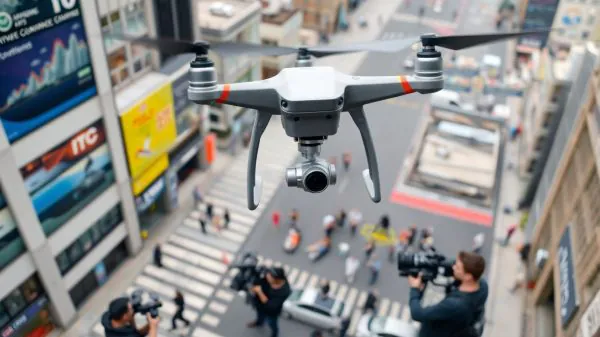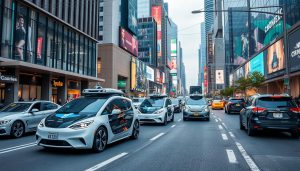
THE autonomous driving technology is changing the way we move. A study by The Boston Consulting Group and the World Economic Forum shows that self-driving cars could reduce the number of cars on the road by up to 60%. This happens when cars share the road.
This innovation will significantly change traffic. Traffic accidents could drop by 90% and harmful emissions by 80%. We already have cars like the semi-autonomous Volvo XC90 in Brazil. But full technology will take about 20 to 30 years to arrive.
Brands like Volvo and BMW are racing to create self-driving cars. They want a safer, more sustainable future for everyone.
In our own country, research and projects like SegurAuto are working on this technology. Brazil is joining this movement. We are moving toward a future with greater safety and advanced mobility.
Introduction to Autonomous Vehicles and Their Global Development
THE advancement of autonomous cars It's a major milestone in vehicle technology. It promises to change how we travel and reduce accidents. Around 1.35 million people die in traffic accidents every year.
Asia, led by Baidu and AutoX, is already testing self-driving cars. These tests are the beginning of the journey toward fully autonomous vehicles. Europe and the United States are also investing in research and legislation for self-driving cars.
The progress of self-driving cars is gradual. Overcoming technical, legal, and ethical challenges is essential. But the potential to make cities safer and less congested is great.
The Technology Behind Self-Driving Cars
Self-driving cars are evolving significantly thanks to advances in technology. This includes artificial intelligence, navigation systems and obstacle detectionThese innovations improve safety and make driving more efficient and precise.
Sensors as Digital Eyes
You sensors are essential in self-driving cars. They act as digital eyes, capturing information about the environment. With computer vision, those sensors help to obstacle detection. This way, the car can see and react to unexpected pedestrians and obstacles.
Artificial Intelligence and Decision Making
THE artificial intelligence is what makes the self-driving car work. It processes data from sensors to make decisions on its own. This AI learns and adapts, improving its driving performance over time.
The Role of GPS and Navigation Systems
THE GPS and navigation systems are essential for self-driving cars. They help plan the most efficient and safe routes. The vehicle then adjusts its route as needed, ensuring a smooth and punctual journey.
The Challenges in Implementing Autonomous Driving
The implementation of autonomous vehicles faces many obstacles, including technical issues, legislation, and infrastructure. In Brazil, the scenario is complex. This is due to infrastructural and regulatory factors that need to be overcome.
A major barrier is the lack of specific laws to autonomous vehiclesLegislation must cover operation and public safety. Furthermore, roads must be adapted to accommodate autonomous technology.
Countries like Germany and parts of the United States are making progress on regulation. However, Brazil is just getting started. An action plan with investments and partnerships is needed to overcome these challenges.
This transition goes beyond the adoption of new technology. It involves urban and legal changes. Understanding and resolving these challenges is crucial for the future of autonomous driving in Brazil.
Vehicle Autonomy Levels and Their Classification
The evolution of autonomous cars is linked to SAE International classification. It categorizes vehicles by their levels of autonomyThis classification helps to understand the technological advancement and automation capabilities of vehicles.
From Level 0 to Level 5: Understand the Differences
Vehicles without assistance are classified as Level 0. Level 5 has full autonomy. SAE International defines these levels, demonstrating progress toward vehicle independence.
At Level 1, cars have basic features like lane-keeping assist and cruise control. At Level 2, there's more automation, like cruise control and automatic braking. At Level 3, cars make informed decisions. artificial intelligence.
At Level 4, cars operate without a driver under specific conditions. And at Level 5, they have full autonomy, without the need for human interaction.
Certification and Security: Where We Are Today
The demand for safe vehicles is growing. Therefore, autonomy certification is essential. It ensures the robustness and reliability of technologies.
Today, the transition to higher levels of automation is a focus. Regulations are constantly being updated to keep pace with new technologies. It's crucial to ensure that autonomous systems are safe in practice.
The Progress of Autonomous Vehicles in Brazil
THE technological progress of the autonomous vehicles in Brazil is growing fast. Universities and large companies are making major contributions. SegurAuto Project and the National Institute of Science and Technology for Cooperative Autonomous Systems (INCT) are examples of this.
In cities like São Carlos (SP) and Espírito Santo, research and testing are underway. This demonstrates the country's commitment to this technology. The Honda Legend sedan, with Level 3 autonomy software, demonstrates that autonomous mobility is coming.
BMW, Toyota and Volkswagen are working on fully autonomous vehicles in Brazil. This shows that the country is part of the technological progress global.
Advanced technology, such as the Toyota Mobility Teammate Concept, strives for safe and efficient mobility. Volkswagen is also introducing innovations, such as GEN.TRAVEL. This demonstrates that Brazil is aligned with futuristic trends.
The adoption of this technology is preparing Brazil for a future of innovative urban mobility. This will radically change the way we move.
Partnerships and Projects: National Initiatives Towards Autonomy
In Brazil, the union of automotive technology and collaboration is essential for the development of autonomous vehiclesUniversities and companies have been fundamental in this process. They drive the technology and infrastructure necessary for advancement. Brazilian research plays a crucial role, joining forces in innovative projects such as SegurAuto Project and the INCT for Cooperative Autonomous Systems.
The SegurAuto Project and Its Contributions
THE SegurAuto Project brings together the expertise of several universities and technology companies. Its goal is to incorporate emerging technologies into vehicles, focusing on national contributions to vehicle autonomyThis project demonstrates how strategic partnerships can accelerate the development of advanced technologies. It improves safety and the driving experience, preparing the country for autonomous vehicles.
National Institute of Science and Technology for Cooperative Autonomous Systems
THE INCT to Cooperative Autonomous Systems complements the SegurAuto ProjectThis institute facilitates collaboration between institutions and is a fertile ground for innovation. Researchers are working on robotic vehicles and their applications in cities and rural areas. This demonstrates the importance of supporting advanced research in Brazilian gyms.
Development of Autonomous Vehicles at the Brazilian Academy
To the Brazilian gyms have a crucial role in development of autonomous vehiclesProjects like the Carina driverless car and the autonomous truck in Latin America emerged here. These initiatives offer advanced technical solutions and update knowledge, preparing new professionals for the sector.
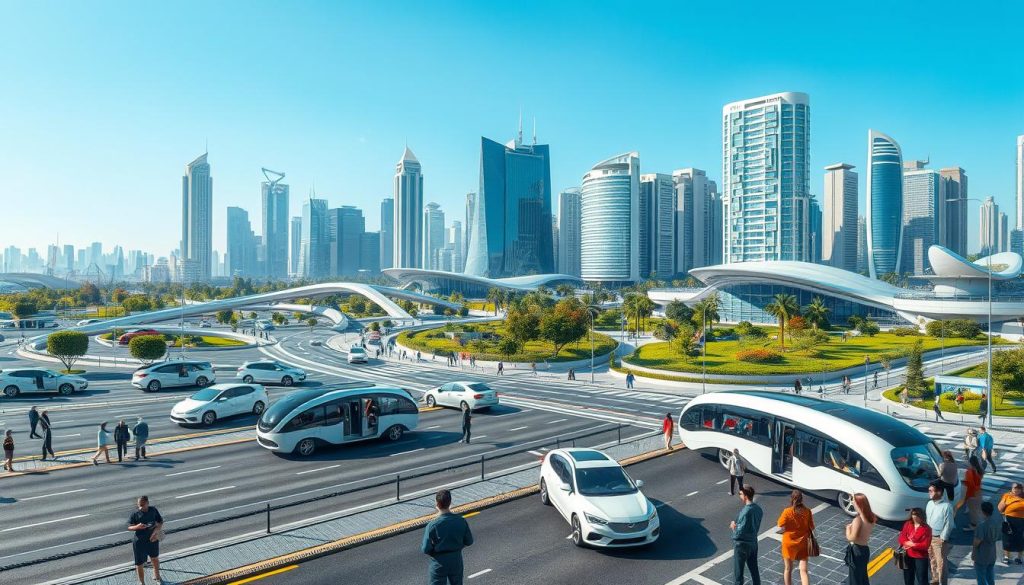
How Autonomous Vehicles Can Reduce Accidents and Traffic Jams
Autonomous vehicles promise to change the way we travel. They can reduce accidents and congestion in cities. Research shows that these innovations improve traffic flow and increase safety.
Self-driving cars operate without human assistance. They use sensors, cameras and artificial intelligence to navigate. This makes them react much faster, reducing accidents.
Self-driving cars can also communicate with each other. They share traffic information. This helps avoid congestion and improve traffic flow.
5G technology is essential for self-driving cars. It allows data to be transmitted quickly, crucial to the safety and efficiency of these vehicles.
Over time, autonomous vehicles could completely change traffic. They reduce accidents and improve traffic flow. This transforms the way we move around cities.
Impacts of Autonomous Cars on the Transportation and Logistics Sectors
Technology is changing logistics, especially with autonomous trucksThey can reduce costs by up to 40% in freight services. This is a significant impact that changes the economics of logistics.
Self-driving cars boast incredible technological advancements. Electronics account for 40% of their cost. Furthermore, they can significantly reduce accidents, resulting in insurance savings.
Autonomous Trucks and the Revolution in Cargo Transportation
Companies like Google, Apple, and Mercedes-Benz are testing vehicle autonomy. They're using SAE 2 and SAE 4 vehicles. In Brazil, we're still in the early stages, but we already have projects underway.
You autonomous trucks They can make faster deliveries. They use big data to make decisions. This also increases safety and reduces operational costs.
Redefining Mobility with Autonomous Public Transportation
THE autonomous public transport is changing mobility. It promises more economical, safe, and accessible travel. It also improves routes, serving previously underserved areas.
Studies show that 311% of people would prefer a self-driving car to public transportation. 5G technology will be essential for vehicle-to-vehicle communication. By 2040, autonomous public transport can nearly eliminate road deaths.